

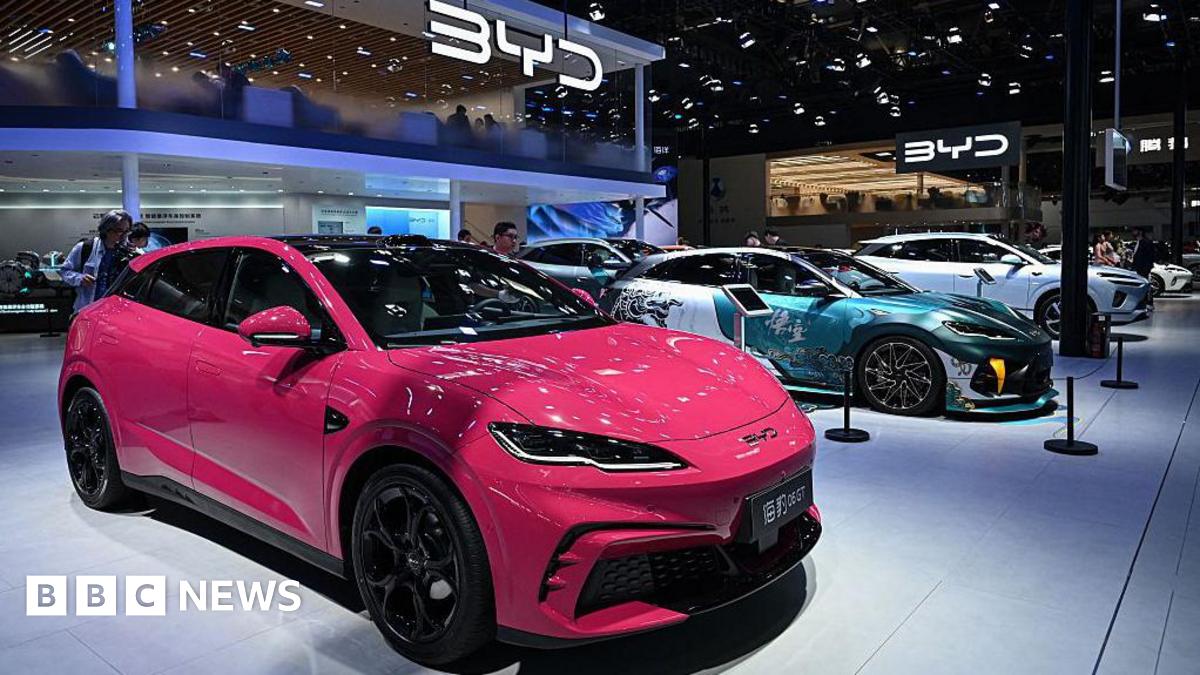
The recent surge in fuel prices due to the war in Iran has spurred demand for electric vehicles around the world, and Chinese car makers are making the most of the opportunity.
The recent surge in fuel prices due to the war in Iran has spurred demand for electric vehicles around the world, and Chinese car makers are making the most of the opportunity.
Tho, maybe it’s because the Chinese don’t deal with these huge margins they have on cars now. A new car now costs tenfold what a new car would cost a few decades ago
Average car price 20 years ago in Canada, $32,700. That $52,000 corrected to inflation.
Average price of new car in Canada 2026 is $63000, but average is a stupid measure, the median is much lower.
I can’t find the actual median price but it is estimated by one site at $45K.
The big difference between today and a few decades ago is people leasing cars they cannot afford, which drives up prices.
I can confirm the price of new cars in France, it seems to be everywhere. Also, “thanks to” leasing, you would think most people can afford BMWs and brand new big cars at a very high price. It’s really irresponsible when you know that they don’t earn enough for those cars, and they will lose thousands of dollars in the process.
Not entirely disagreeing with you. The way you worded it was always going to be the case if all you do is compare window sticker prices from across the decades though. Inflation cuts your money in half roughly every 20 years. A 20K car in 2006 is a ~40k car today even if everything else stayed equal. The average price for cars after inflation is going up though. The US’s trend towards SUVs and trucks is certainly pulling prices up but other things do as well like the government mandated features(small relatively but not nothing).
Some examples(these are when they became mandatory, not available)
Average new car price has gone up a lot because the average new car has been purchased by rich people who demand high performance and luxury features. And rich people have been doing great the last 50 years, so the top of the market has totally run away with high prices.
If you actually dig into specific models and what they go for, you see that the most basic cars have only gone up slightly in price, but are also much higher performing (0-60 times, quarter mile times, braking distance), more efficient (better highway/city gas mileage), more reliable (more miles/years to failure), and have a lot more standard features that used to be expensive add-ons (automatic transmissions, power windows/locks, power steering), and are generally better constructed (smaller panel gaps, better sound proofing/vibrations), and much, much safer by pretty much every measure.
Today’s cars, even the cheapest ones, are much better than the cars from the 90’s, much less the cars from the 70’s (5-digit odometers because getting past 100,000 miles wasn’t necessarily expected, bodies that rusted within a decade of normal use).
So if a first generation Honda Civic in 1974 cost $3000 in 1974 dollars (inflation adjusted to $21,000 today), we should compare what that car was, compared to what a Honda Civic is today (starting at around $25,000 for the barebones model, $30,000 for a few nicer features). Compare torque/horsepower specs, actual performance at 0-60/quarter mile, gas mileage, all of that. I’m not entirely convinced that the people of 1974 were getting a better bargain on their cars than today’s new economy car buyer.
I hate that cars have gotten so big, and that the SUV is basically the American default at this point. But I don’t think that car prices have actually gone up that high in the 30 years I’ve been driving. And cars from before I was driving just…sucked.
Are you sure on the TPMS date? I’ve got a vehicle that’s much newer than 2007 that doesn’t have it
For the US it’s September 2007, for the EU it started November 2012 but seems like a phased rollout until 2014. Don’t really follow EU regs.
Canada, and still not mandatory here apparently. Which is weird because a lot of our automotive requirements do tend to follow the US due to common production lines and other such factors